
Rockford Water Hardness: 9 to 21 Grains Per Gallon
Updated
Short answer
Part of Water Softener Installation.
Get a free quote
A licensed plumber replies with a price. Nothing is booked until you say yes.
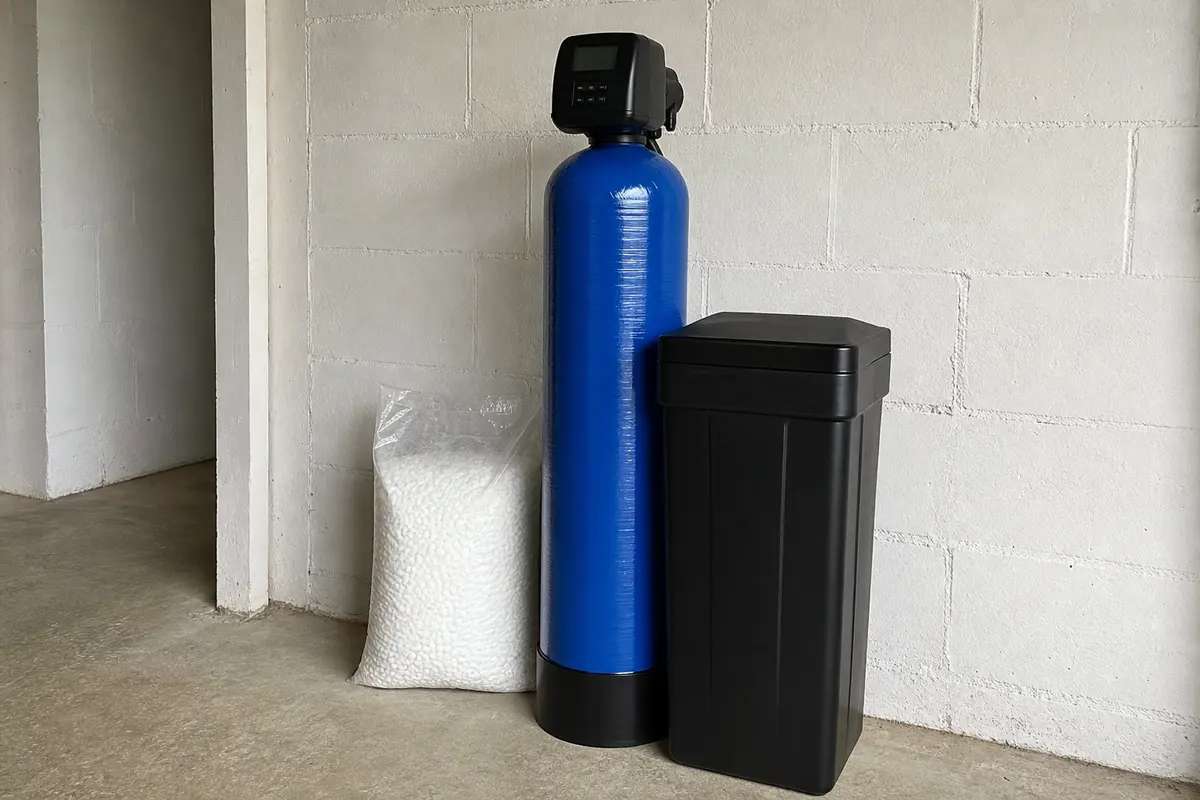
If you have white crust on a showerhead or a kettle that scales up in a month, you are not imagining it. Rockford water carries a lot of dissolved calcium. The City calls its source water naturally hard, and its own bulletin gives a range of 9 to 21 grains per gallon. That bulletin is undated, so read the range as a general picture and not as this month's test result. We install and service water softeners across Rockford. This page covers what the number means and what it does inside your house. For the install itself, see water softener installation.
Rockford water hardness by the numbers
Hardness is measured in grains per gallon. More grains means more dissolved calcium and magnesium. Here is what the City publishes about the supply.
| What | Rockford figure | Source |
|---|---|---|
| Hardness | 9 to 21 grains per gallon | Getting Your Water |
| Source | 30 wells, groundwater | About the Water System |
| Radium, 2025 testing | 0 to 3.76 pCi/L (limit 5 pCi/L) | 2025 water quality report |
| Chlorine, 2025 | 0.6 to 1 ppm (limit 4 ppm) | 2025 water quality report |
The City says it runs the largest municipally owned groundwater system in Illinois. Treatment happens at the well sites with fluoride, polyphosphates and chlorine, and the filtration plants are designed to remove iron, manganese and radium (About the Water System). The 2025 report lists no violation for radium, which tested between 0 and 3.76 pCi/L against a limit of 5. Radium is a safety question the City answers at the plant. Hardness is a different thing. Plant filtration for radium does not soften the water, and a home softener is not a radium treatment. They solve separate problems.
Why Rockford water is hard
Groundwater picks up minerals as it moves through rock, and Rockford's wells pull from the ground, so the calcium comes along. The City's lead page says the source water is naturally hard (calcium carbonate) with a neutral pH. It also points out a side benefit: the hardness minerals coat the inside of household plumbing, which helps keep lead from dissolving (City lead page). The same minerals are what you see as scale.
What hard water does to a water heater
The City Water Division says a water heater should be drained and flushed at least once a year to clear sediment such as iron, manganese and calcium, and more often in some areas (Water Heater Maintenance bulletin). That is the heater paying for the water it heats. Heat makes dissolved minerals drop out of the water, and in a tank they settle on the bottom. A layer of sediment sits between the burner or element and the water, so the heater works harder for the same hot water. It can rumble or pop as water trapped under the crust boils. We cover what that means for age and replacement in how long water heaters last.
If you are replacing a tank, ask your plumber about the flush schedule at the same visit. A tank that has never been flushed is harder to drain, because sediment can clog the drain valve. For a price on the swap itself, see water heater replacement and the plumber cost page.
What hard water does to fixtures and pipes
The damage shows up at the fixtures first. Scale builds on aerators, showerheads and any fixture that sees hot water, and it wears out the cartridges in a shower valve or faucet. It narrows the openings, so flow at the tap drops even though pressure in the house is fine. White film on glass and chrome is the same calcium. You can often soak a showerhead in vinegar and wipe it clean. Mineral crust also builds inside pipe walls over many years. In an older house with small supply lines, that narrowing adds up. If low flow runs through the whole house, the pipes themselves are worth a look. See galvanized pipes in older homes.
Iron and manganese are a separate item. Each spring the City runs a unidirectional hydrant flushing program to clear iron and manganese buildup in the mains. The water stays safe to drink, but it can run discolored, and the City says to avoid hot water until it clears (Iron and Manganese bulletin). If you see brown water after flushing, run the cold tap until it clears before you use hot water.
Does Rockford need a water softener?
That is your call, not a code rule. A softener makes sense when you are tired of scale and spotting, or when you want to protect a water heater. Size depends on hardness and household use. National cost guides say softener price depends on system capacity and the hardness level (HomeGuide). Because Rockford's own figure is a range of 9 to 21 grains per gallon, a plumber should test your tap water instead of working from a bulletin.
National guides put a softener at $1,000 to $3,000, unit and install together (Modernize, This Old House). Those are typical U.S. ranges, not quotes. Your price depends on the unit, your basement layout, and whether a drain and an outlet are already near the water main.
Permit note: the City says replacing a softener in the same location is exempt from a plumbing permit when no trap or piping is resized or rearranged (Rockford permit FAQ). A new softener in a new spot may need one, so ask us before the work.
Hardness in nearby towns
Most Winnebago County towns pump groundwater too, but the published hardness numbers are thin. Belvidere's 2025 water quality report shows hardness of 19 to 28 grains, drawn from 7 city wells (Belvidere 2025 report). That sits above Rockford's printed range. The reports we read for Loves Park, North Park Water (which serves Machesney Park and Roscoe), Rockton and South Beloit do not list a hardness figure, so a tap test is the real answer in those towns. See our pages for Belvidere, Loves Park and Rockton.
Hard water, appliances and the bill
Scale costs money slowly. A water heater with sediment on the bottom works harder for the same hot water, and a dishwasher or coffee maker scales up and needs descaling. Those are general effects of hard water and not Rockford measurements, so we do not put a dollar figure on them. They are the reason many homeowners add a softener when they replace a water heater. Iron and manganese are the City's job at its filtration plants. Ask a plumber what a given softener does and does not treat before you buy.
How to find your own hardness
There are three ways, cheapest first. Read your water system's latest annual report and look for a hardness line. Buy a test strip kit and test a glass from the cold tap. Or have a plumber test it on site, which is what we do before we size a softener. One reading from your tap beats any average. A private well can differ a lot from the city system next door. If you are on a well, read private wells and septic in Winnebago County.
Sources (11)
- City of Rockford Water Division, Getting Your Water
- City of Rockford, About the Water System
- City of Rockford, 2025 Consumer Confidence Report
- City of Rockford, Lead in Drinking Water
- City of Rockford Water Division, Water Heater Maintenance
- City of Rockford Water Division, Iron and Manganese
- City of Rockford, permit FAQ
- City of Belvidere, 2025 water quality report
- HomeGuide, water softener cost
- Modernize, water softener installation cost
- This Old House, water softener system cost
Want a price for your own house?
Call, text, or send the form. You get a price back before any work is scheduled.
Quick answers
How hard is Rockford, IL water?
The City of Rockford Water Division puts it at 9 to 21 grains per gallon in an undated bulletin. The City's 2025 water quality report does not list a hardness figure, so treat the range as a guide and test your own tap.
Where does Rockford's water come from?
All of it comes from groundwater. The Water Division runs 30 wells and says it is the largest municipally owned groundwater system in Illinois. It does not use the Rock River.
Does Rockford water have radium in it?
Radium occurs naturally in the ground, and the City tests for it. The 2025 report shows combined radium between 0 and 3.76 pCi/L against a limit of 5 pCi/L, with no violation listed. The City's filtration plants are designed to remove iron, manganese and radium.
Is hard water bad for a water heater?
Minerals settle in the tank as sediment. The Rockford Water Division says a water heater should be drained and flushed at least once a year to clear sediment such as iron, manganese and calcium. Skipping the flush leaves a layer on the bottom that makes the heater work harder.
Do I need a water softener in Rockford?
No rule requires one. Many homeowners add one to stop scale on fixtures and to protect the water heater. Size depends on your water's hardness and how many people use it, so have it tested first.
Is Belvidere water harder than Rockford water?
Belvidere's 2025 water quality report shows an average hardness of 19 to 28 grains. Rockford's bulletin gives 9 to 21 grains. Belvidere's printed range sits above Rockford's.
Why is my water brown after the city flushes hydrants?
Iron and manganese stir up in the mains when the City flushes hydrants each spring. The water is safe, but the City says to avoid hot water until it runs clear. Run the cold kitchen tap until it clears, and hold off on laundry while it is discolored, because iron stains.
How much does a water softener cost to install?
National cost guides show about $1,000 to $3,000 for the unit and installation together. See our plumber cost page for how we price a job.
Want a price on the job?
Send the job, the town and a rough size. A licensed plumber replies with a price before any work starts.
Prices and the full service list are on the homepage for a plumber in Rockford.