
Gas Line Installation in Rockford, IL
Get a free quote
A licensed plumber replies with a price. Nothing is booked until you say yes.
Updated
Short answer
A gas line job usually means connecting one more appliance to a gas supply you already have: a range, a clothes dryer, an outdoor grill, a fire pit, a fireplace or a standby generator. Sometimes it means a new line from the street. This page covers what the work costs, which jobs are small and which are not, what a permit and an inspection look like, and what to do first if you smell gas.
If you smell gas, do this first
Get everyone out of the house and call from outside. Do not turn lights or switches on or off, do not use a phone inside and do not light anything. Call 911 and then your gas utility. The smell gas guide has the full steps and what to expect afterward. A burst pipe that affects a gas water heater is a separate case: the city says to shut off the water at the shutoff valve and turn off the circuit breaker or gas controlling the water heater (City of Rockford).
What gas line installation costs
Rockford plumbers do not publish prices, so these are typical U.S. ranges from national 2026 cost guides, not quotes. The plumber cost page covers the rest of the job list.
| Job | Typical cost | Source |
|---|---|---|
| Extend an existing line or add an appliance | $350 to $2,000 | HomeGuide |
| Most homeowners, average $540 | $260 to $820 | Angi |
| New gas line from the street | $2,000 to $10,000 | HomeGuide |
Angi says the cost is driven by pipe material, route complexity and the number of turns in the line. HomeGuide says the distance from the existing supply and the size of the job matter. A dryer line along a basement wall is a short run. A line across the yard to a generator or a fire pit means trenching, more pipe and more inspection. A new line from the street costs the most.
Common gas line jobs
| Appliance | What the job involves | Things we check |
|---|---|---|
| Gas range or cooktop | A new or moved line to the kitchen, a shutoff valve and a flexible connector | The existing line size, the distance to the range and the shutoff location |
| Gas dryer | A branch to the laundry room with a shutoff valve | Venting to the outside and whether the line is already stubbed |
| Grill or fire pit | A buried or surface line to the patio or yard with a shutoff and a quick-connect | The route, the trench depth and where the line passes under hardscape |
| Generator | A line to the generator pad, often larger than other appliance lines | The generator's demand and whether the existing meter and line can carry it |
| Fireplace or log set | A line to the firebox with a shutoff | The unit's manufacturer instructions and ventilation |
| Water heater or furnace | A new or replaced connection | Venting and combustion air, covered under mechanical rules |
Each appliance has a rated gas demand, and the pipe feeding it has to be big enough to carry the demand of everything on that line at once. That is why adding a generator or a second range to an existing line is not just a matter of tapping in. We add up the load before we pick the pipe size.
Permits and licensing for gas piping in Rockford
The City of Rockford requires a plumbing permit to install, alter, repair, remove, convert or replace plumbing systems, equipment, appliances or fixtures (City of Rockford permits). The city's page does not name gas piping, and gas appliance rules can sit with the mechanical code, so we confirm the permit with the city before we start instead of guessing. Construction and Development Services is at 425 East State Street and its phone is (779) 348-7158 (City of Rockford permit application).
Illinois requires a license for anyone who plans, installs, alters, extends, repairs or maintains plumbing systems (IDPH Plumbing). An owner who lives in a single-family home may do their own plumbing, and any helper they hire has to be a licensed plumber (Illinois Plumbing License Law). Whether a specific piece of gas pipe counts as plumbing or as mechanical work is a question to put to the city for your address and your appliance. We do not suggest guessing on gas. A leak you cannot see is a risk to the whole house. See the permits guide and the owner exemption guide, and use the license check guide for whoever you hire.
Outside Rockford the rules differ. Loves Park publishes a plumbing permit schedule at $40.00 plus $15.00 per fixture opening (Loves Park fee schedule), and Belvidere requires a plumbing permit under Sec. 22-313 (Belvidere Chapter 22). Whether gas piping counts as a plumbing opening in each town is something we confirm with the building office, not something we assume. If you are in Loves Park, Belvidere or an unincorporated area, call the building office, or ask us and we call.
What moves the price
| Factor | Why it matters |
|---|---|
| Distance from the existing line | Every extra foot of pipe is material and labor, and long runs cost more to support and test. |
| Number of turns | Angi names route complexity and the number of turns as a cost driver. |
| Access | A basement with exposed joists is faster than a finished wall or a slab. |
| Trenching | A line to a detached garage, a grill or a generator pad means digging, and the surface is restored after. |
| Appliance demand | A generator or a second range can need larger pipe than the line that is there now. |
| Permit and inspection | These are part of the job where the city or village requires them. |
Sources: HomeGuide and Angi (HomeGuide, Angi). We give you a written price after we walk the route, so you do not find out about a turn or a wall after work starts.
Gas lines in older Rockford houses
The median Rockford home was built in 1965, and 42.5% of homes date to before 1960 (Census ACS 2024). In a house that age the gas piping may have been added to, capped and moved several times. Before we add an appliance we look at what is already there: old stubs that are capped off, joints that look worn, a line that is too small for what it now feeds and valves that no longer turn. We report what we find, and we do not add a new load onto a line we do not trust.
Before the new appliance arrives
- Tell us the make and model, because the manufacturer sets the connection size and the gas demand.
- Decide where the appliance will sit, since moving it later means moving the line.
- Clear the path to the existing line so we can see and reach it.
- Tell us if the appliance is propane or natural gas, because the two are not interchangeable.
- Plan for the gas to be off to that part of the house for the cutover.
Gas is shut off at the appliance and at the meter for the connection work. We test the new line, relight what we turned off and confirm each appliance starts and runs. If anything does not pass, we leave that part off and tell you why.
Outdoor gas: grills, fire pits and generators
An outdoor line runs from the house to the patio, the yard or a pad, and sits in a trench or on the exterior wall. It needs a shutoff near the appliance and a plan for what the line passes under. If you may add a patio or a deck later, tell us now, because it is easier to place the line than to dig it up. For a generator we add up the whole-house load to see whether the existing meter and line can carry it, and we tell you if the utility needs to be involved. A service area town such as Rockton or Roscoe is permitted through the Winnebago County Building Division, and we check with it before we start.
How a gas line install goes
- We walk the route, find the existing line and add up what the new appliance will draw.
- We confirm the permit and any inspection with the building office for your town.
- We shut off the gas, run and support the new pipe, and add a shutoff valve at the appliance.
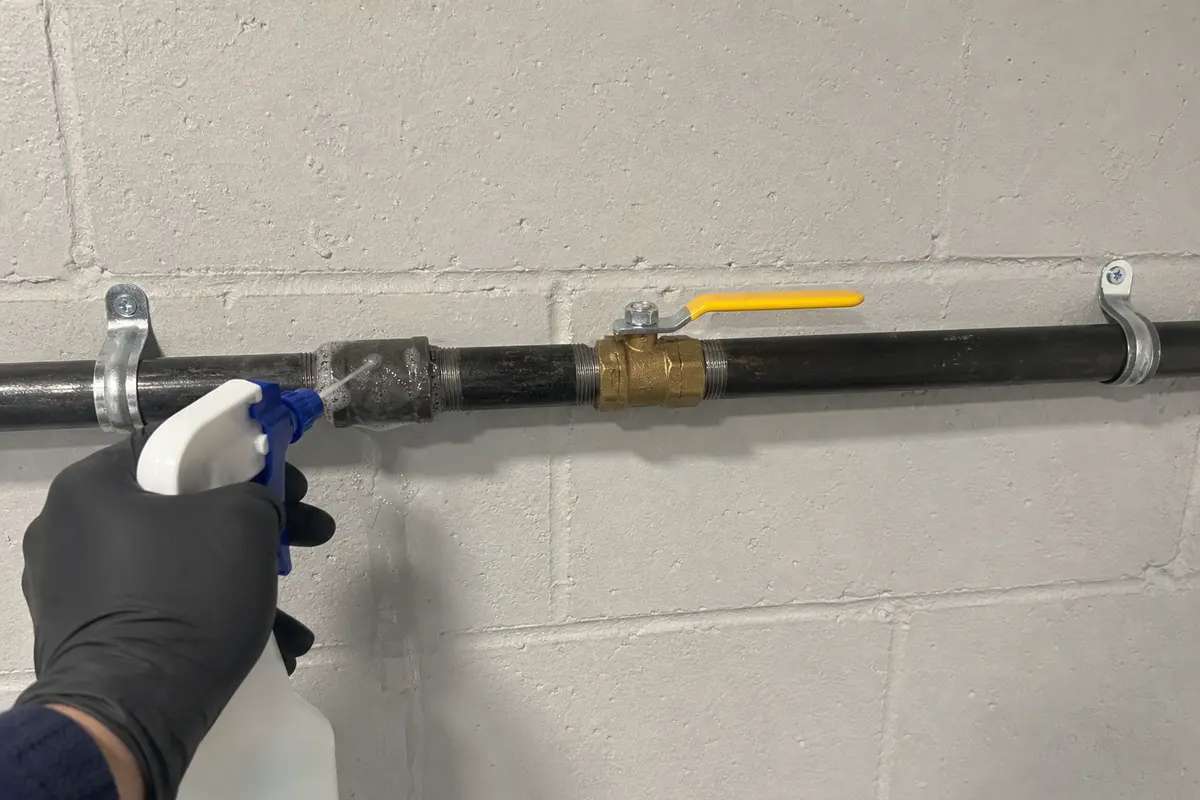
- We test the line for leaks before it goes into service, and an inspector looks at it where one is required.
- We relight the pilots or confirm the appliance starts, and we show you where the shutoff is.
Show everyone in the house where the gas shutoff is. For an outdoor line to a grill or fire pit, we mark the route so you know where not to dig, and we give you the line depth and location for your records.
Shutoffs, connectors and carbon monoxide
Every gas appliance should have its own shutoff valve within reach, so you can turn off one without losing the rest. Appliances connect to the rigid line with a short approved flexible connector, and the connector is replaced when the appliance is. We add or replace the shutoff while we are there. Gas appliances that burn fuel also produce combustion gases, so carbon monoxide detectors belong on each level of the house. We tell you if we see signs that an appliance is not venting properly, and we leave that appliance off until it is corrected.
Questions to ask before you hire
- Who confirms the permit for my town, and is it in the price?
- How will you size the line for the appliance I am adding and the ones already on it?
- Will you test the line for leaks before it goes into service, and how?
- What happens if you find an old line or connector that does not pass?
- Is the license current? Use the license check guide.
Generators, and winter
A standby generator is a common reason to add a gas line, because Rockford has real cold. The normal year has 11.5 days with a low at or below 0 F and 50 days with a high at or below 32 F, and the record low is -31°F (2019) (NWS normals). A line to a generator has to be sized for the unit's full draw, and the generator's pad and the meter are part of the plan. Before a cold snap, keep your pipes from freezing and know your water and gas shutoffs. Frozen pipe repair covers what happens if they do freeze.
Gas appliance and water heater work
A gas water heater is also a gas connection, and a new one is covered under water heater replacement. We handle the water side and the gas connection together. Venting, combustion air and the appliance's own installation rules sit with the mechanical code and the manufacturer, and we follow both.
Sources (10)
- HomeGuide, gas line installation cost
- Angi, cost of a natural gas line run
- City of Rockford, Mechanical and Plumbing Permits
- City of Rockford, Owner-Applicant Permit Application
- City of Rockford, Cold Weather Preparedness
- Illinois Department of Public Health, Plumbing
- Illinois Plumbing License Law (225 ILCS 320)
- City of Loves Park, building permit fee schedule
- Belvidere municipal code, Chapter 22 (plumbing permits and fees)
- NWS Chicago, Rockford 1991-2020 normals
Where this is done
Gas Line Installation across Rockford and the cities and villages around it. Each town page covers its own water supplier, sewer and permit office; the full list is on the service area page.
Ready for a price on gas line installation?
Call, text, or send the form. You get a price back before any work is scheduled.
Gas Line Installation: questions
How much does it cost to run a gas line?
HomeGuide puts extending an existing line or adding an appliance at $350 to $2,000, and Angi says most homeowners spend $260 to $820. A new line from the street runs $2,000 to $10,000 or more. See the cost page.
What should I do if I smell gas?
Get everyone out, do not touch light switches or use a phone inside, and call 911 and your gas utility from outside. Read the smell gas guide for the full steps.
Do I need a permit to run a gas line in Rockford?
Rockford requires a plumbing permit for installing or altering plumbing systems, equipment and appliances. The city page does not name gas piping, so we confirm with Construction and Development Services before starting. See the permits guide.
Can I run my own gas line in Illinois?
An owner-occupant of a single-family home may do plumbing in that home, and any helper must be a licensed plumber. Whether gas pipe counts as plumbing or mechanical work is a question for your city. A hidden leak is a risk, so we do not suggest guessing.
How long does a gas line installation take?
A short line to a dryer or range can be done in a visit. A buried line to a generator or a fire pit takes longer, and a new service from the street depends on the utility. We give a schedule after we see the route.
Can you run a gas line to a generator?
We size the line to the generator's full demand and confirm the meter and existing line can carry it. A generator usually needs more than a small appliance line does, so the pipe size is part of the quote.
Does a gas line get inspected?
Where a permit is required, an inspector reviews the work, and every line is tested for leaks before it goes into service. We confirm the permit and inspection with the building office for your town.
What does a new gas line from the street cost?
HomeGuide says adding a new gas line from the street to a home ranges from $2,000 to $10,000 or more. Extending an existing line or connecting a new appliance costs much less. The utility's part and the trenching drive the difference.
Other services
Gas Line Installation: get a written price
Send the job, the town and a rough size. A licensed plumber replies with a price, and no work starts until you agree to it.
Prices and the full service list are on the homepage for a plumber in Rockford.