Clogged Drain: What to Try Before You Call a Plumber
Updated
Short answer
Part of Drain Cleaning.
Get a free quote
A licensed plumber replies with a price. Nothing is booked until you say yes.
Some clogs are a ten minute fix, and some get a lot worse if you wait. Here is how to sort it. The hands-on steps are the same ones we start with. The cautions come from poison control, Consumer Reports, EPA and the sewer authority. For the job itself, see drain cleaning.
What to try first on a clogged drain
Start with one fixture and work up.
- Plunge it. Use a cup plunger on a sink or tub and a flange plunger on a toilet. Block the overflow opening on a sink or tub with a wet rag so the pressure goes down the drain.
- Clear the stopper or strainer. Hair sits right under it in a tub and a bathroom sink. Pull it by hand.
- Open the trap. Put a bucket under the U-shaped pipe below a sink, unscrew the slip nuts, and clean it out. A kitchen trap is often a plug of grease and food. If the sink has a disposal that hums or will not spin, that is a garbage disposal repair, not a clog.
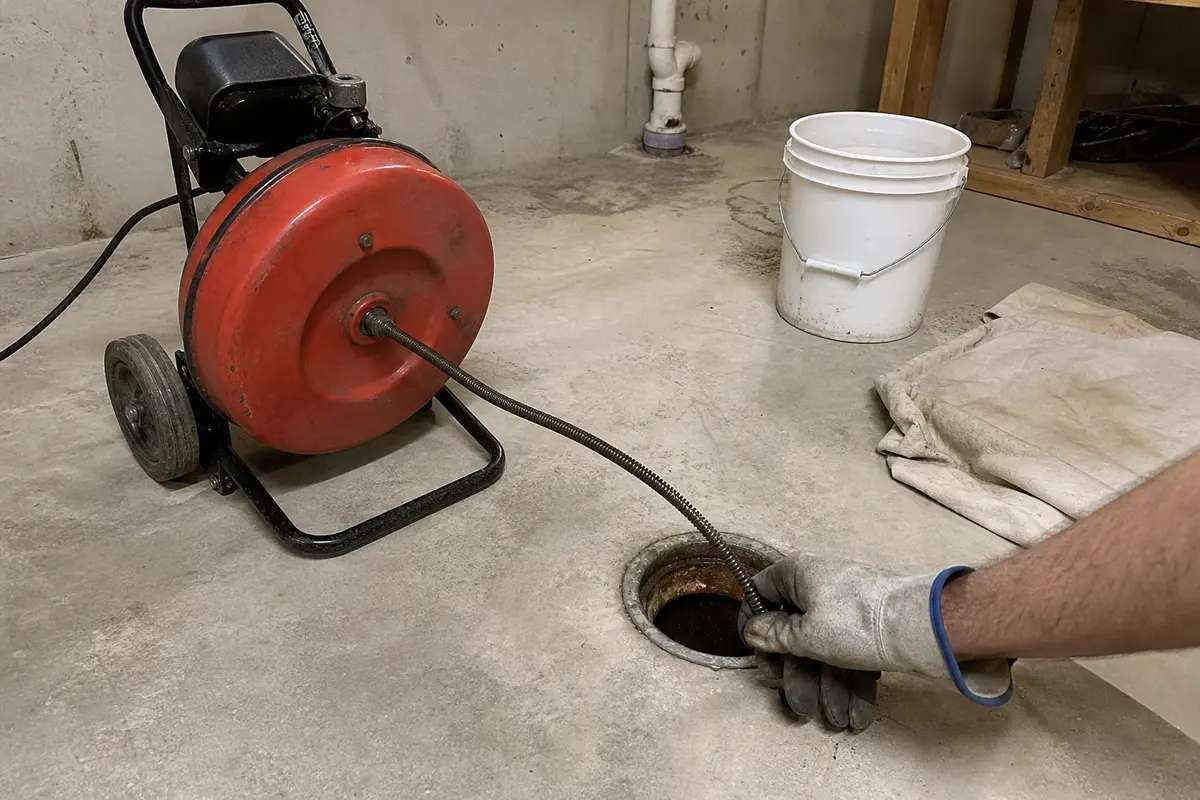
- Use a hand auger. A small snake from a hardware store reaches a few feet past the trap. Go slow, and stop if it will not advance.
If that fails, call. Forcing tools harder can scratch a pipe or push a clog further. For a toilet that is the only fixture stopped, see toilet repair.
Why we skip chemical drain cleaners
Poison Control says drain openers are caustic products, and to buy one only if nothing else will do the job, to read the label and follow it exactly, to wear gloves, to keep it away from children and pets and never to move it into a food or drink container (Poison Control). Consumer Reports adds that you should never mix multiple drain cleaners, or use them with other chemicals like bleach, and to ventilate the room (Consumer Reports).
There is a plumber problem too. If a chemical cleaner does not clear the clog, it sits in the pipe as standing water that is hazardous to whoever opens the trap next. A clean, dry pipe and a mechanical tool come first. If you already poured something in, tell us before we start. It changes how we work and what we wear.
Septic systems and drain cleaners
If your house is on a septic system, which some homes in the county are, the EPA lists drain cleaners among the liquid wastes you should not pour down the drain, because they can harm the healthy bacteria in the tank and drainfield (EPA septic FAQ). Our guide to private wells and septic in Winnebago County covers who to call.
Kitchen sink vs bathroom drain
Kitchen clogs are usually grease and food (a garbage disposal grinds food, it does not make grease safe), and they sit in the trap and the first few feet of pipe. That is why the trap comes first. Bathroom sink and tub clogs are mostly hair and soap, right under the stopper. A toilet that is the only thing stopped is its own fixture problem. Knowing which fixture is slow tells you which of the first four steps to try. If the same kitchen sink clogs every few weeks, the grease is building further down, and a cleaning with a cable or jetting is the fix. See drain cleaning.
What not to put down any drain
Four Rivers Sanitation Authority says grease, fats, oils, sauces, dairy and food scraps cause clogs. Scrape them into the trash. Detergents can dissolve grease for a while, but it comes back out of solution and sticks to the pipes. It also lists paper towels, rags, diapers and wipes, including ones labeled flushable, as items that should never go in the sewer (FRSA homeowner tips). Tree roots are another cause on the outside line, and FRSA says to plant new trees at least 10 feet from pipes.
When it is a main line problem, not a sink clog
One slow sink is a branch line. Several fixtures at once is a different thing. The tell is the pattern:
- Water in a basement floor drain or tub when you run the washer or flush a toilet.
- Gurgling in a toilet when the shower drains.
- Every drain in the house slow, upstairs and down.
- Sewage smell, or debris in the water coming up.
FRSA lists debris in the water, a terrible odor and overflow from drains or toilets as signs of a clogged sewer line. If you think the sewer main is blocked, call the FRSA sewer backup department 24/7 at 815-387-7600. During business hours staff help work out whether the blockage is in the main or in your service line. FRSA maintains the main sewer lines only. If the main is clear, the owner pays a contractor to clear the line from the house to the main (FRSA homeowner tips). FRSA says to turn off your water first. See who owns the sewer line in Rockford and what to do about a sewer backup in the basement.
After hours, FRSA says you will be directed to a licensed and bonded contractor who checks its main for flow. If the main is flowing, the cleaning is on you, including any after hours fee. Single family and duplex homes can get a discount on that service line cleaning, $100 off, once every 2 years, through FRSA-registered contractors. We are glad to talk through it. Ask what the contractor is registered for before you book.
What drain cleaning costs
National cost guides put a sink, tub or toilet clog at $100 to $275, with the simple ones near the bottom (HomeGuide, Modernize). Cleaning the main sewer line runs $200 to $300 (Angi). A camera inspection to see what is down there is $125 to $500. All of these are typical U.S. ranges, not quotes. The plumber cost page shows how we price a visit. If a clog keeps coming back in the same spot, the pipe itself may be the problem, so see sewer line repair.
Clogs in Rockford and nearby towns
The same steps apply in Loves Park and Cherry Valley. FRSA serves a large part of the county, and the list of served communities is on its site (FRSA, who we serve). If you are outside its area, your village runs the sewer, so call it first.
Sources (10)
- Four Rivers Sanitation Authority, homeowner tips
- Four Rivers Sanitation Authority, who we serve
- Poison Control, caution with caustics
- Consumer Reports, how to choose and use a drain cleaner
- U.S. EPA, frequent questions about septic systems
- Modernize, drain cleaning cost
- HomeGuide, drain cleaning cost
- Angi, drain cleaning cost
- HomeGuide, sewer camera inspection cost
- Angi, sewer camera inspection cost
Want a price for your own house?
Call, text, or send the form. You get a price back before any work is scheduled.
Quick answers
What should I try first on a clogged drain?
Use a plunger, clear the stopper and clean the trap under the sink. A hand auger comes next. These are low-risk and fix many single-fixture clogs.
Are chemical drain cleaners safe?
Poison Control calls them caustic and says to use one only if nothing else will do the job. Never mix cleaners or use them with bleach, and keep them away from children and pets.
Can I use drain cleaner with a septic system?
The EPA lists drain cleaners among the liquid wastes you should not pour down the drain of a septic system, because they can harm the bacteria that treat waste. Use mechanical methods instead.
How do I know if the clog is in the main sewer line?
Several fixtures backing up at once, a floor drain that fills when you run the washer, or gurgling in a toilet when another fixture drains. Call Four Rivers Sanitation Authority's 24/7 line at 815-387-7600 if you think the main is blocked.
Who pays to clear a sewer backup in Rockford?
FRSA maintains the main sewer lines only. If the main is clear, the homeowner pays a contractor to clear the line from the house to the main. See who owns the sewer line.
How much does drain cleaning cost?
A sink, tub or toilet clog runs about $100 to $275 in national guides. Main line cleaning runs about $200 to $300. See our plumber cost page.
Why does my drain keep clogging in the same place?
Grease buildup, tree roots or a damaged pipe are the usual reasons. A camera inspection shows which one. Repeat clogs on the main line often mean roots or a belly in the pipe.
Want a price on the job?
Send the job, the town and a rough size. A licensed plumber replies with a price before any work starts.
Prices and the full service list are on the homepage for a plumber in Rockford.